Exercise and Brain Fog: What Your Workouts Can Do

TL;DR. Exercise and brain fog are connected through a fairly specific mechanism: regular aerobic activity, not strength training on its own, is linked to a larger hippocampus, the brain region behind verbal memory and learning. The research behind this used about 120 minutes of brisk walking a week, close to the general guideline of 150 minutes, and the brain changes took six months to a year of sticking with it. Exercise is one lever among several. Sleep and stress affect brain fog too, and it is worth ruling those out alongside adding movement.
Exercise and brain fog: what the research actually shows.
Brain fog is not a medical diagnosis. It is the everyday name for feeling slower to think, harder to focus, or foggier than usual, and it can come from a lot of places: poor sleep, stress, a poor diet, or simply an inactive stretch. Exercise is one of the more studied levers for it.
Research from the University of British Columbia, covered by Harvard Health, found that aerobic exercise specifically increases the size of the hippocampus, the part of the brain most tied to verbal memory and learning. The same study did not find the same effect from resistance training or balance exercises. That distinction matters: this is not a case for "any exercise helps equally," it is a case for aerobic work in particular. Source: Harvard Health, regular exercise changes the brain to improve memory and thinking skills.
Why aerobic exercise seems to matter most.
The likely reasons are both direct and indirect. Directly, aerobic exercise reduces insulin resistance, lowers inflammation, and triggers growth factors that support the health of brain cells and the formation of new blood vessels. Indirectly, it improves mood and sleep and reduces stress and anxiety, three things that themselves cause or worsen the foggy, unfocused feeling most people mean when they say brain fog.
That second pathway is worth sitting with. A lot of what people describe as brain fog traces back to poor sleep or chronic stress rather than the brain itself losing capacity, and aerobic exercise happens to improve both of those at the same time it is doing anything more direct to brain tissue.
How much exercise this actually takes.
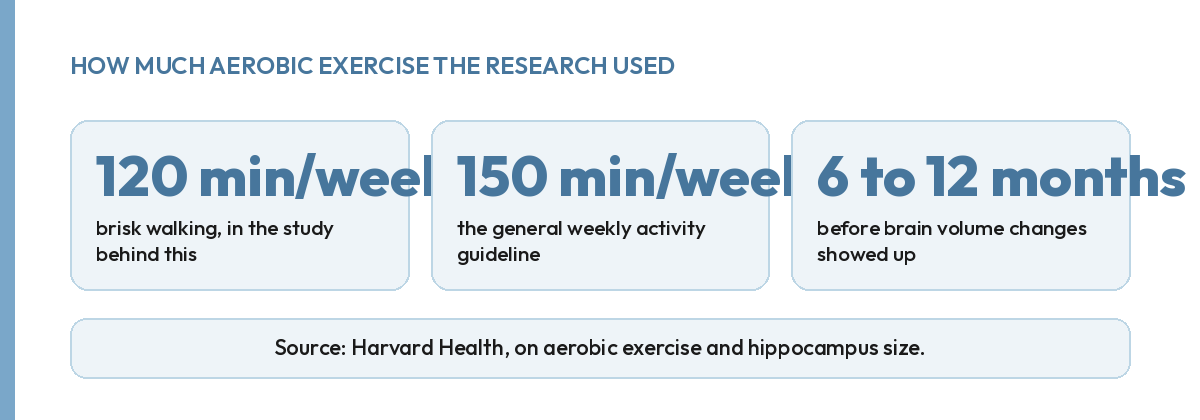
The participants in the underlying research walked briskly for one hour, twice a week, roughly 120 minutes total. That lines up closely with the general guideline of 150 minutes of moderate activity a week that most health bodies recommend for other reasons too. Other aerobic activities, swimming, cycling, dancing, stair climbing, are expected to offer comparable benefit, since the mechanism is the aerobic demand rather than walking specifically.
The changes in brain volume in that research took six months to a year of sticking with it, so this is a case for consistency over a single hard session. A brisk 20 to 30 minute walk on most days gets you to roughly the same weekly total with less friction than trying to fit in two long sessions.
What else feeds into brain fog.
Exercise is one input, not the whole picture. Sleep debt is one of the more common and correctable causes of feeling foggy, since a short or broken night's sleep affects attention and working memory the next day almost immediately, faster than any exercise programme changes anything. Your sleep trend, tracked next to your training, is often the first place worth looking if brain fog shows up on days after a bad night specifically.
Chronic stress and simply being sedentary for long stretches during the day are two more common contributors, and diet is a fourth: the same eating pattern linked to lower dementia risk also shows up in research on nutrition and brain health as a factor in day to day thinking, not just long-term risk. None of this rules out a medical cause. Persistent brain fog that does not improve with better sleep, regular movement and a reasonable diet is worth raising with a doctor rather than assuming exercise alone will resolve it.
Is 20 minutes of exercise enough to notice a difference?
For mood and alertness, often yes, and much sooner than the structural brain changes above. A single session of moderate exercise tends to lift mood and sharpen focus for a few hours afterward, which is a real but short-lived effect, separate from the slower structural changes that build up over months of consistent aerobic activity. Do not expect one walk to permanently clear ongoing brain fog. Do expect it to help that afternoon, and expect the cumulative version to build if you keep it up. See the research behind the exercise mood boost for how much that lift actually measures and how much exercise it takes to see it.
What this looks like in a week.
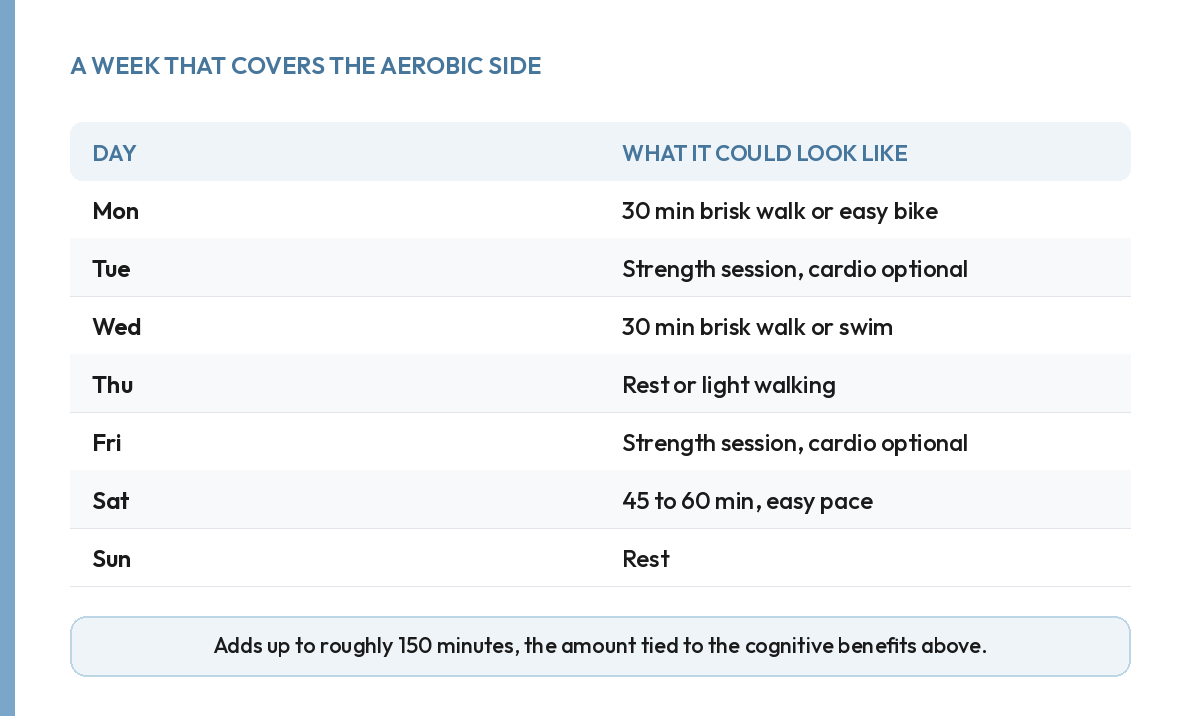
You do not need a separate cardio programme bolted onto your strength training to hit this. Two or three brisk walks or easy rides during the week, plus one longer easy session on a weekend, covers the roughly 150 minutes involved without turning into a second training block. If you already track VO2 max or another fitness measure, this same weekly aerobic volume is also what moves that number over time, so the two goals point in the same direction.
Recovery still matters here. Pushing every session hard defeats the purpose if it costs you sleep or adds stress, which is the opposite of what this is meant to do. Keep most of these sessions at an easy, conversational pace, and lean on an actual rest day when your week needs one, rather than adding a hard aerobic session on top of a week that was already demanding.
Tracking whether it's working for you.
Brain fog is subjective, so the best evidence is usually how you feel against what you actually did that week, not a lab test. Inside The Health Project, your training log shows your aerobic minutes alongside your sleep and recovery, so if a foggy stretch lines up with a run of missed walks or short nights, the pattern is visible rather than a guess. If your weeks already feel demanding, a planned deload week is sometimes the better move before adding more activity on top.
We show you the trend. We do not tell you what your result means. If something looks off, that is a conversation for your doctor.
FAQ.
Does exercise get rid of brain fog?
Regular aerobic exercise is associated with better memory and thinking over time, but brain fog has many causes, including sleep, stress and underlying health conditions. It is one useful lever, not a guaranteed fix, and a doctor is the right call if it persists.
What kind of exercise helps most with brain fog?
Aerobic exercise, brisk walking, swimming, cycling and similar, shows the clearest link to the brain changes involved. Strength training still matters for other reasons, just not this specific one in the research covered here.
How much exercise do I actually need?
The research behind this points to around 120 to 150 minutes of moderate aerobic activity a week, which is roughly 20 to 30 minutes most days.
How soon would I notice a difference?
The brain volume changes in the underlying research took six months to a year of consistent activity. Mood and alertness after a single session tend to show up much sooner than that.